
The spotlight on celebrity families rarely operates on a stable schedule. When Annie Lennox children news surfaces in public discourse, what appears as simple curiosity about family updates masks a deeper set of questions about privacy, legacy management, and how public figures navigate personal milestones under watchful eyes.
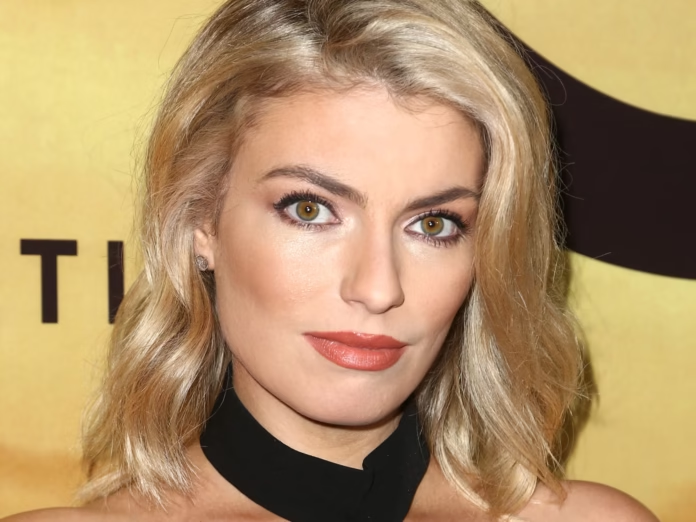
Lola Lennox, Annie’s daughter with former husband Uri Fruchtmann, recently married longtime partner Braeden Wright in an intimate ceremony on the Spanish island of Ibiza. The couple’s announcement arrived through carefully curated social media posts that balanced personal joy with controlled visibility. This approach reflects what many entertainment professionals now understand as a calculated PR strategy rather than spontaneous sharing.
What’s notable here isn’t just the wedding itself but the execution. The images showed outdoor venues, ocean backdrops, and selective guest lists. This type of milestone management demonstrates how second-generation public figures build their own media narratives while acknowledging inherited scrutiny.
The Reality Behind Career Navigation And Inherited Attention Pressure
Lola has pursued a music career independently, releasing an EP and working to establish credibility separate from her mother’s iconic status with Eurythmics. In industry conversations, she’s addressed the “nepo baby” debate directly, acknowledging privilege while asserting that initial access doesn’t guarantee sustained success.
From a practical standpoint, this reflects what actually happens in creative industries. Look, the bottom line is that a famous surname opens doors, but it doesn’t keep them open. The data from entertainment careers shows that second-generation performers face heightened scrutiny and accelerated criticism when output doesn’t match expectations.
Lola’s positioning emphasizes work ethic and musical merit. This framing strategy attempts to preempt dismissal while recognizing unavoidable context. What I’ve learned from observing these patterns is that transparency about advantages often disarms criticism more effectively than denial.
Tragedy, Privacy Boundaries, And The Timing Of Public Statements
Annie Lennox’s other daughter, Tali, experienced profound personal loss recently when her boyfriend died following a kayaking accident. The family’s response to this tragedy illustrates how celebrity households manage grief under public observation.
Reports confirmed the death without extensive detail. No prolonged media tour, no exclusive interviews dissecting emotions. This restraint reflects evolved understanding about reputational risk and compassion fatigue. When families overexpose pain, audiences eventually disengage or, worse, question authenticity.
The reality is that strategic silence often serves multiple purposes. It protects genuine grief from commodification while preventing speculation from spiraling into invasive territory. From a brand management perspective, this approach maintains dignity without appearing cold or calculating.
Family Structure Signals And What Public Appearances Actually Reveal
Annie Lennox has two daughters from her marriage to Uri Fruchtmann, which lasted from the late eighties until the turn of the century. The couple also experienced the stillbirth of a son, a detail rarely discussed but part of the family’s private history.
Public appearances by Lola and Tali alongside their mother occur selectively. These aren’t frequent red carpet moments but rather strategic visibility at events aligned with causes or career milestones. This pattern suggests intentional boundary-setting rather than avoidance.
What this tells us is that family members of high-profile figures increasingly control their own exposure levels. The old model where celebrity children either disappeared completely or became tabloid fixtures has given way to more nuanced participation. Here’s what actually works: selective engagement that serves personal or professional goals without inviting constant surveillance.
The Context Of Activism, Legacy Building, And Next-Generation Positioning
Beyond entertainment pursuits, Annie Lennox’s public identity centers significantly on activism, particularly regarding HIV/AIDS awareness in Africa. This positioning creates a specific legacy framework that influences how her children navigate their own public identities.
Lola’s music career and Tali’s creative pursuits exist within this larger context. They’re not just daughters of a pop icon but part of a family brand associated with social consciousness. This adds complexity to their individual positioning strategies.
From a market perspective, this dynamic creates both opportunity and constraint. The association with activism elevates credibility but also sets expectation benchmarks. What I’ve seen play out repeatedly is that second-generation figures either embrace inherited causes or deliberately pivot to establish distinct territory.
Media Narrative Cycles And How Confirmation Patterns Shape Stories
When Annie Lennox children news circulates, the information typically arrives through controlled channels: official social media posts, carefully timed announcements, or rare interviews. This isn’t accidental. It represents deliberate media literacy and recognition that narrative control begins with information timing.
The cycle works predictably. A milestone occurs, selective details emerge, media outlets amplify with context about the famous parent, then interest dissipates until the next event. Understanding this pattern helps explain why certain stories gain traction while others fade.
The bottom line is that attention operates on a supply and demand model. Limited information creates interest; oversaturation breeds indifference. Celebrity families who maintain strategic opacity around personal matters often sustain longer-term public curiosity without crossing into invasive territory that triggers backlash or sympathy fatigue.

