The Business Card Is Dead — Long Live the Business Card
Imagine handing someone a card at a conference and watching their eyes light up as your full portfolio, LinkedIn profile, and contact details instantly appear on their phone — no app needed, no typing, no scanning. That’s not a scene from a tech expo. That’s what NFC business cards do every single day, and they’re quietly revolutionizing how professionals make first impressions.
The traditional paper business card has been around since the 15th century. It had a good run. But in a world where your phone can pay for coffee, unlock your car, and board a plane, carrying around a rectangle of cardstock with your job title embossed on it starts to feel a little… analog. NFC technology offers something far more powerful — and the professionals who’ve already made the switch aren’t going back.
What Exactly Is an NFC Business Card?
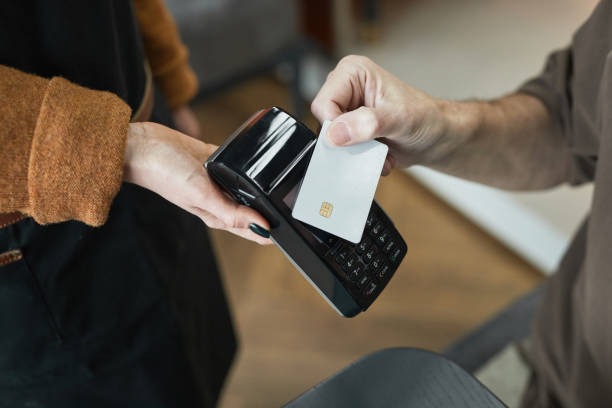
NFC stands for Near Field Communication, a short-range wireless technology that enables two devices to exchange data when they’re within a few centimeters of each other. You’ve likely used NFC dozens of times without realizing it — every time you tap your phone at a payment terminal or use a contactless transit card, that’s NFC at work.
An NFC business card works on the same principle. It contains a tiny embedded chip that, when tapped against a smartphone, instantly triggers an action — opening a digital profile, a website, a vCard contact file, or a custom landing page. No app installation required. No QR code to squint at. Just tap and connect. The experience is smooth, fast, and genuinely impressive in person.
The Problem With Paper Cards Nobody Talks About
The paper business card industry produces billions of cards every year. Of those, studies suggest that nearly 88% are thrown away within a week. That’s not just wasteful — it’s a missed opportunity. All that printing, all that effort, and your carefully designed card ends up in a recycling bin alongside a coffee cup and a sandwich wrapper.
Beyond the environmental cost, paper cards are static. Once they’re printed, that’s it. If you change your phone number, get a new job title, or launch a new service, you’re either reprinting thousands of cards or handing people outdated information. In fast-moving industries like tech, consulting, real estate, and marketing, outdated contact info can genuinely cost you clients and deals.
How NFC Cards Solve Real Networking Problems
NFC business cards flip the script on every limitation paper cards carry. Because the card points to a digital profile — hosted on platforms like HiHello, Popl, Linq, or a custom domain — you can update your information in real time without ever replacing the card. Your card always stays current, always reflects your latest work, and always sends people exactly where you want them to go.
They also eliminate the friction of manual data entry. When someone receives your traditional card, the best-case scenario is they photograph it or type your details into their phone. The worst case? It sits in a pile of identical cards and is never seen again. With an NFC tap, your contact details are saved instantly, your social profiles are one click away, and the person you just met already has everything they need to follow up.
The Environmental Case for Going Digital
Sustainability is no longer just a buzzword — it’s a business value. Brands and professionals who demonstrate environmental responsibility are increasingly preferred by clients, partners, and talent. Switching from paper to NFC business cards is a small change that sends a clear signal about your values.
Consider the math: a single NFC card replaces hundreds, potentially thousands, of paper cards over its lifetime. The card itself is typically made from PVC, metal, bamboo, or recycled materials, and it lasts for years. Some providers like Mobilo and Dot even offer cards made from sustainable materials specifically designed to appeal to eco-conscious professionals. For companies handing out cards to entire sales teams, the reduction in paper waste becomes genuinely significant.
Why First Impressions Are Infinitely More Memorable
There’s something undeniably theatrical about the NFC card moment. You’re at a networking event, a pitch meeting, or a trade show. Instead of the forgettable shuffle of paper cards, you hold your card near someone’s phone and their screen lights up with your name, your face, your work. The interaction itself becomes a talking point.
First impressions in professional settings are formed within seconds, and NFC cards give you a tool to make those seconds count. They communicate that you’re forward-thinking, tech-savvy, and detail-oriented — qualities that transfer onto your professional brand whether you’re a freelance designer, a startup founder, or a corporate executive. The card isn’t just carrying your information anymore; it’s carrying your personality.
NFC Cards in the Age of Remote and Hybrid Work
The modern workplace has changed dramatically. Networking no longer happens exclusively at in-person events. Virtual conferences, LinkedIn DMs, and remote client calls have become the norm. NFC cards are uniquely built for this reality because they’re deeply integrated with digital ecosystems.
Many NFC card platforms allow you to share your card digitally too — via a QR code backup, a link, or even a widget in your email signature — so the same card that works at an in-person meeting also covers you in virtual environments. Platforms like Blinq and Dot allow one profile to work across both physical NFC taps and digital sharing, giving you a unified, consistent personal brand wherever networking happens.
What to Look for When Choosing an NFC Business Card
Not all NFC cards are created equal. When evaluating your options, consider a few key factors. First, look at the analytics — the best NFC platforms show you how many times your card has been tapped, which links were clicked, and where your profile views are coming from. That kind of data turns networking into something measurable.
Second, think about customization. Your card should reflect your brand, not the platform’s. Look for providers that allow custom landing pages, branded color schemes, and logo placement. Third, check compatibility — modern NFC cards work with both Android and iPhone without any app required, but it’s worth confirming. Finally, consider durability. Metal NFC cards from brands like Metal Kards and V1CE look premium and last virtually forever, which is worth the higher upfront cost for senior professionals.
The Business Case: ROI of a Smarter Card
At first glance, an NFC card might seem expensive compared to a stack of paper cards. A quality NFC card typically runs between $15 and $50 depending on materials and platform. But that single card replaces what would otherwise be hundreds of paper cards reprinted every few months. Over a year, the math almost always favors NFC.
More importantly, the value isn’t just in the cost savings — it’s in conversion. When your profile is instantly accessible, beautifully presented, and easy to save, more people follow up. More connections actually convert into leads, partnerships, or opportunities. For sales professionals, recruiters, and entrepreneurs where a single new relationship can be worth thousands of dollars, a better business card isn’t a luxury. It’s leverage.
FAQ: Everything You’ve Been Wondering About NFC Business Cards
Do both iPhones and Android phones support NFC tapping? Yes. iPhones from iPhone 7 onward support NFC natively, and most modern Android phones have had NFC capability for years. In most cases, the recipient doesn’t need to download any app — they simply tap the card and their browser opens the profile automatically.
What happens if the recipient’s phone doesn’t have NFC? Most NFC cards come with a backup QR code printed on the back, so anyone can still access your profile by scanning it with their camera app. This ensures no networking opportunity is ever lost due to a compatibility gap.
Can I update my NFC card after I’ve given it to someone? Absolutely. That’s one of the biggest advantages. Your NFC card points to a live digital profile, which you can update anytime through the platform’s dashboard. Anyone who taps your card — whether today or two years from now — will always see your most current information.
Are NFC business cards secure? Yes. The NFC chip in the card only triggers a simple action — like opening a URL — and doesn’t have the ability to access any data on the recipient’s phone. There’s no security risk involved in tapping an NFC card.
Is NFC networking appropriate for all industries? NFC cards work beautifully across most professional industries — tech, real estate, finance, creative fields, healthcare, and beyond. That said, in some traditional or conservative industries, it’s wise to read the room. Some senior executives may still prefer paper, and having a hybrid approach never hurts.
How long does an NFC card last? The NFC chip itself has a virtually unlimited lifespan for passive use. The card’s physical durability depends on the material — metal cards last almost indefinitely, while PVC cards are comparable to a standard credit card. Your card won’t “expire” digitally as long as you maintain your platform subscription.